
Gold vs Silver for Beginners: Which One Should You Start With
6 min read · Editorially reviewed
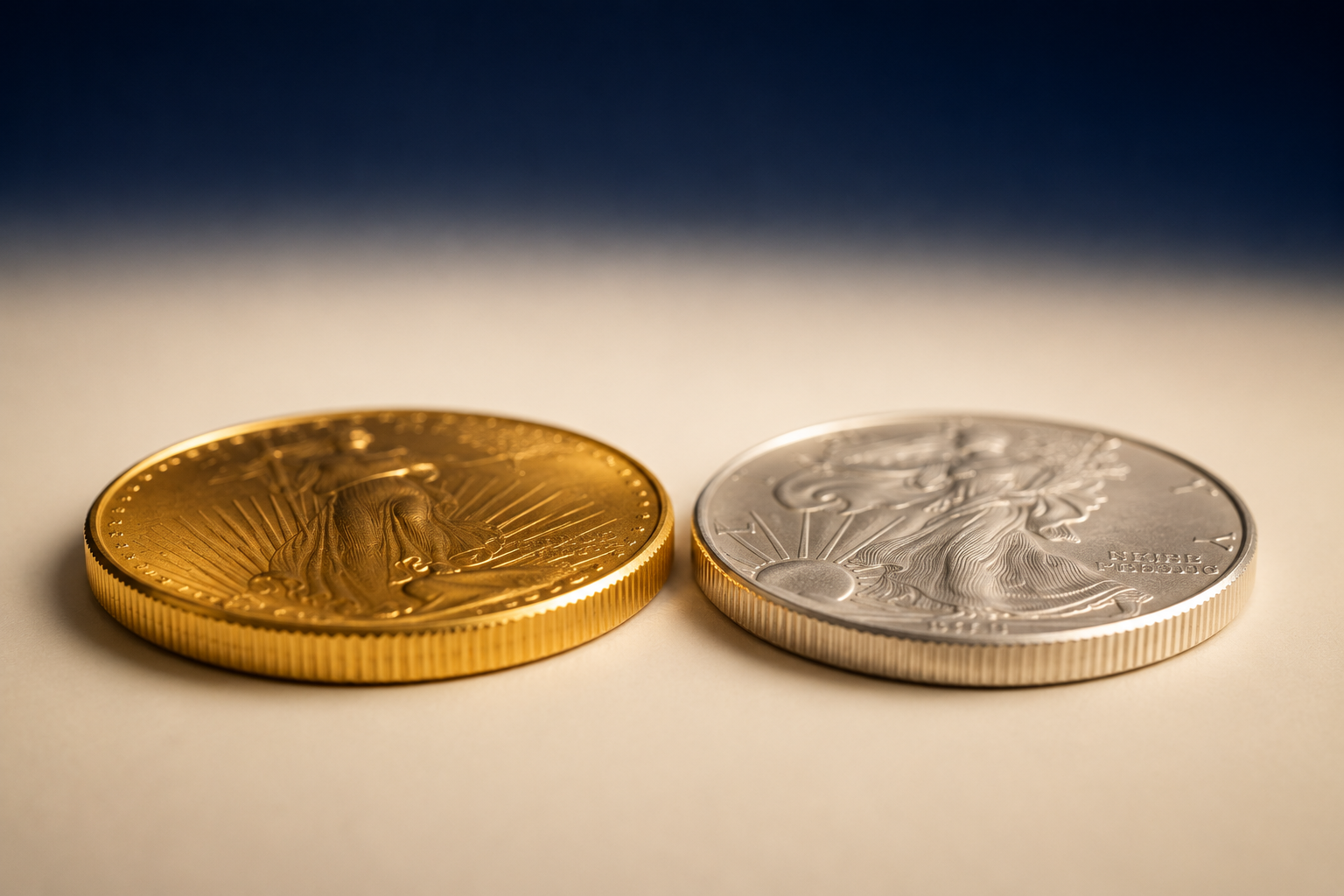
Most people researching precious metals for the first time ask the wrong opening question. It's not "which is better" — it's "which one fits what I'm actually trying to do."
Gold and silver behave differently enough that the right starting point depends on your situation, not on which metal has the better headlines. Our Gold vs Silver hub sets out the side-by-side reference data; this piece is about how to actually choose.
The price gap changes what's realistic
Gold trades at a significant premium per ounce compared to silver — often 70-90 times higher. That single fact shapes almost everything else. A modest allocation to gold might mean a handful of coins. The same dollar amount in silver means a meaningfully larger physical stack, which affects storage, insurance, and how liquid your holding feels day to day.
Free resource
Get the Free Precious Metals IRA Guide
Rollover rules, custodian selection, and storage requirements in plain English.
For someone starting with a smaller amount to allocate, silver's lower per-unit cost makes it easier to build a position gradually, without needing a large lump sum upfront.
Volatility is the trade-off
Silver has historically moved more sharply than gold, in both directions. It's a smaller market, with more industrial demand mixed into the price (silver is used heavily in electronics and solar manufacturing), which makes it more sensitive to economic swings. Gold's price tends to be driven more by monetary and safe-haven demand, which historically has made it the steadier of the two.
Neither is "safer" in an absolute sense. Gold has historically shown less price movement; silver has historically shown more upside in strong periods and more downside in weak ones.
Purity standards apply to both
Whichever metal you start with, investment-grade product is defined by fineness rather than branding. The LBMA maintains the Good Delivery standards that set minimum purity and refiner accreditation for wholesale gold and silver, and those standards are what reputable retail coins and bars are measured against.
Storage and practicality
This is the part beginners underestimate. A $50,000 gold allocation might fit in a small safe deposit box. The equivalent value in silver takes up dramatically more physical space, which matters if you're storing at home rather than through a depository. The coins-versus-bars and storage decision deserves its own look before you buy anything.
A reasonable starting framework
- If you're prioritizing stability and have a longer time horizon before you need to draw on the funds, gold is typically the more straightforward starting point.
- If you're starting with a smaller amount and want to build a position over time, silver's lower entry cost makes incremental buying more practical.
- Many people end up holding both, using gold as the core, stable allocation and silver as a smaller, higher-volatility complement.
Read our full Gold IRAs guide for how this applies inside a self-directed retirement account, or compare specific companies in Company Reviews.